Should capital punishment be brought back to the UK?

Executions were long abolished in the United Kingdom with the last (hanging) execution that took place in the year 1964. The death penalty remained a legally defined punishment for certain offences such as high treason. Following the abolition of the death penalty the House of Commons held a yearly vote up until 1997 in attempts to restore this ancient punishment. As you could have guessed, they were unsuccessful in their attempts and the motion was defeated and put to rest. 

Many have come and argued that the death penalty should be brought back solely because if one person can take the life of another, the only punishment that seems fitting for them is for their own lives to be taken as a result. Others believe that after one has committed a terrible crime such as murder, being reprimanded for such a thing leads for them to change their ways. Criminals too can change, but there are different views on whether they should really be given another chance to roam society with others, whilst in fear that they may strike again on another innocent being. People will forever have mixed views about this particular topic of capital punishment. Sadly, most repeat offenders will not see a problem in their disruptive behaviour, whether the disruption they have caused in society is minor or major. This means that the individual will never change if they do not see a fault in their actions. But who am i to judge?

As of 2015, the electric chair was still seen as an option for execution in some U.S. states such as, Alabama, Florida, South Carolina, Kentucky, Tennessee and last but not least Virginia. A particular film that comes straight to my mind when thinking of the electric chair is The Green Mile (1999) based on the story by Stephen King’s published in 1996. This film is set in a death row prison block in 1935 Louisiana; The Green Mile explores the idea of the death penalty by promoting it as the foremost form of punishment. This film manages to promote the fear and discomfort of this particular punishment and shows that the people sentenced to this kind of end are also human and have emotions. The main protagonist Paul (Tom Hanks) shows that even the ordinary members of society must walk their own “Green Mile” the title of the movie; that serves as a powerful metaphor for the condition of humanity as they wait for their own inevitable end.  John Coffey played by Michael Clarke Duncan turns out to be an innocent man with supernatural capabilities, who sadly faces the capital punishment leaving the viewers distraught and distressed. Paul does not refrain from expressing his discomfort and utter disgust at this type of punishment. It is through Paul’s emotiveness that we feel as if this type of execution is particularly painful and that no one really deserves to have such an agonizing end. Through this film the viewers are constantly reminded that no one can escape their fate however guilty or innocent they may be. A thought that hits deep.
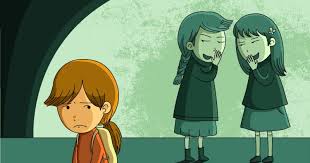
Not every murderer is guilty and not every victim is innocent.

Usually if someone has been trialed and found guilty, morally, people want to see that person punished. How many of us can admit that the thought of not every murderer being guilty or that every victim not being the innocent one has ever crossed our minds? Arguably the victim can also be seen as the guilty party, the victim could have provoked the perpetrator and as a result, the violence that does occur can end with someone getting hurt. We have all watched some kind of Hollywood movie, which includes one lawful abiding protagonist who “turns bad” after an innocent family member or close friend of theirs is wrongly murdered. Does this make the character that sets out for revenge on their “innocent” friend guilty? Or is it something we would all do if there were no consequences for our actions. 

Questionably, violence can be seen as necessary when it comes to protecting yourself or a loved one that is in a particular vulnerable state and feels they are overpowered in the situation they are in. But the question always goes back to, how far can you really go in stopping someone that is being violent. How far does the other person have to go until they are stepping over the victim perpetrator boundary, when do these lines truly start to blur? Perhaps the boundary is blurred when the person being victimised is too helpless to stop the perpetrator and chooses to stop them using violence. If the victim results to using violence, does this mean that they are just the same as the perpetrator? If someone purposely sets out to do another person harm, would this mean that they are just as guilty?

 You may, or may not have heard about the case of Steven Avery, an American convicted murderer who had been wrongfully convicted of both sexual assault and attempted murder in the year 1985. He served eighteen years out of a twenty-year sentence only to be exonerated by DNA testing in 2003 and was later released to then be convicted of being a murderer again. Avery’s case provoked widespread discussion into the criminal justice system and how people were in fact found guilty. Important ideas stemmed from this incident, it proved the fact that evidence is not always accurate which gives people probable cause into arguing that not all murderers are guilty. However some like to say and believe in the common phrase “innocent until proven guilty”, nowadays the phrase has become more like a cliché. In this day and age people strongly believe in “an eye for an eye”; if someone has been trialed and found guilty, rightfully they should pay for what they have done, based on the crime committed, an appropriate consequence should be issued. We all strongly believed that the justice system would have limited or even reduced the amount of violence in the world, when in actual fact there has been little reduction to violence; the world is still a cruel place.

the glorification of violence

One of the biggest societal influences in the twentieth and twenty-first centuries has been the mass media, and the particular influences it has on individual’s behaviour and notions of thinking. With the introduction to movies, video and computer games taking on a large role in children’s upbringing, it is no wonder the media is always present in young people’s discussions and debates. However, one may argue that it is this electronic phenomenon, which has taken over the lives of not only young people, but adults as well; on a whole the media has completely changed our lives. 

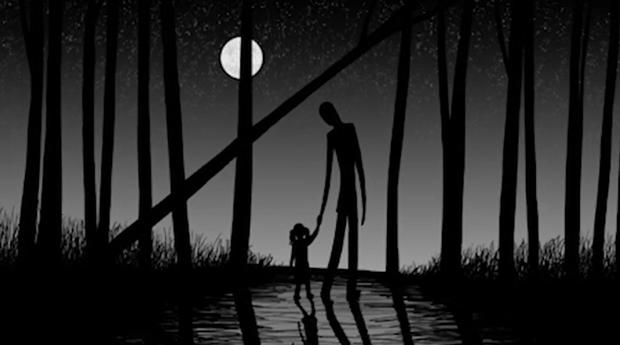
This being said not all media can be seen as having a negative impact on children, but there is evidence that proves otherwise. Some violent crime is celebrated and presented in a positive way through the use of gaming as it is seen as a type of escapism. It is this exposure to violence on television programs, Hollywood films and most notably the violence young people are exposed to in video games such as Fortnite, Grand Theft Auto and Call Of Duty all of which are interactive games that promote violence and engage with inflicting pain on others for “fun”. Recently, “Slender Man” once only an Internet meme, has now been created into a game and more recently movie created by Eric Knudsen causing great turmoil within society. Last July, Aaron Campbell, was plastered all over the media for being known as a young boy (aged 16) who abducted, raped and murdered a six-year-old girl. Reports had mentioned that Campbell was fixated with the faceless monster know as “Slender Man” who abducted children and drew them into the woods. Campbell’s attack resembled the ghoulish figure’s tactics and motifs. Campbell turned his fantasies into a morbid reality where he simply and willingly took the life of another person. After much investigation into this crime it was discovered that Campbell had a “bloodlust for violent video games”. Sadly, this was not even the first crime to arise from the disturbing image of Slender Man. In 2014 another twelve-year-old girl fell victim stating that “they were compelled to kill her by a monster they had encountered online” this rather disturbing comment causes distressing thoughts.

Therefore, it is safe for us to say that growing up in an environment filled with violence does increases the risk of violent behaviour as we are continuously shown. The mass media has a large influence on a young person’s behaviour, values and beliefs. It is believed that exposure to violent content on television and gaming may provide an insight into why a young person decides to commit such an evil murderous crime. In an order to reduce crimes like this taking place parents should try not to expose their children to violent television programs or films (but that is easier said than done nowadays with the accessibility of the internet). Censorship needs to be further reinforced when it comes to what children can and cannot watch. Simply “turning a blind eye” to this ever growing issue of violence in the media will not do. Young people cannot become immune to extreme amounts of violence because it evidently effects young people in creating more innocent victims in this never ending cycle.